Mississippi, 24 hours later

It’s hard to describe the mood in the air in Mississippi right now.

Scott Colum’s victory – the first Democratic senator elected since 1980, the first Black senator to serve the state since Reconstruction, the first ever Black senator to be elected directly by the people of Mississippi – is a sea change that seemed both inevitable and impossible six weeks ago.

50 years from now, his name will be in history books.

But it should never be forgot that history is made not by heroes but by movements, and as important as Scott is, this happened because thousands of folks worked really, really hard, for generations, to make this happen, mostly with no credit or recognition.

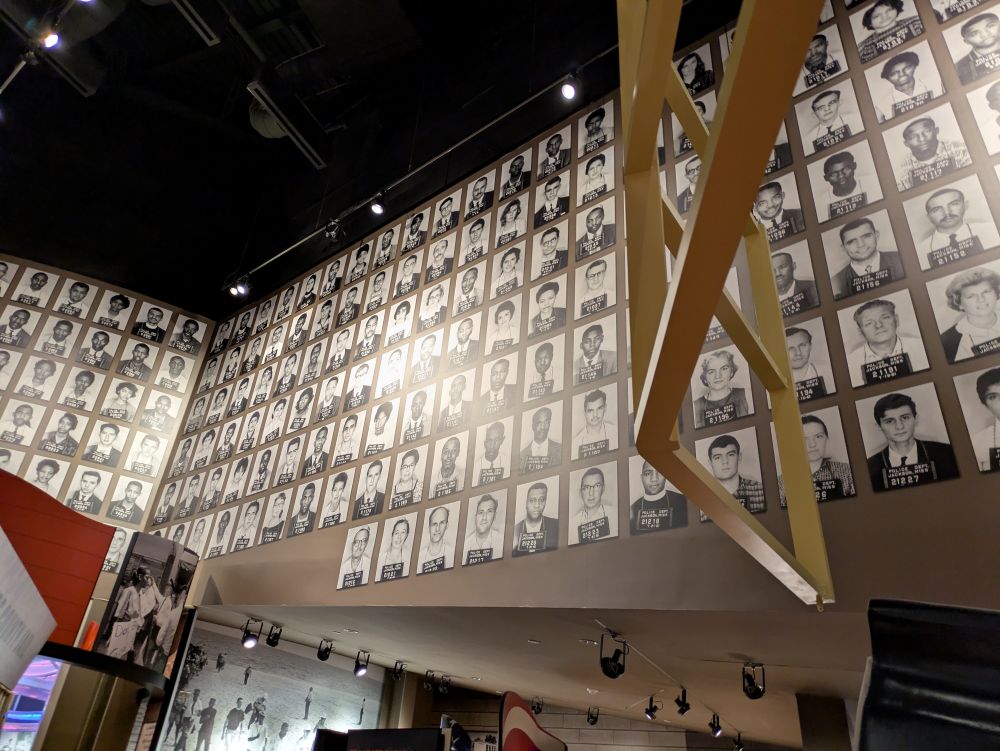
In the Civil Rights Museum here in Jackson, there is a wall filled with mug shots of the Freedom Riders – men, women, children who rode busses from the North to Jackson to break the de facto segregation on interstate busses. In doing so they took on the southern states, the KKK and the Kennedy administration. Some died, some were tortured, many were arrested.

Without looking, most folks could not name 5 of them. And yet, they changed the world. The youngest arrested was Hezekiah Watkins, who serves as a docent to the Civil Rights Museum here. He isn’t 80 years old.

Neighborhoods across the country still have elderly folk in them who rode those busses, risked their lives, were imprisoned and in some cases tortured, and most people don’t even know their names, don’t recognize them for who they are.

That is the work of movements – we do our part to move the promise of a better world for all of us further, to scooch it closer to reality. Not everybody knows who did what. But as my daddy told me, we can do great things if we don’t have to fight about who gets the credit.

My buddy David LaMotte taught me that if we believe history is made by charismatic heros, then when things go wrong, he have to wait for one to show up. But if we believe history is made by movements, then we just have to find other folks who want the same thing, and figure out where we fit.

I’m ridiculously glad to be living in a Mississippi that elected Scott Colom. I’m so grateful for the thousands of folks whose work moved this closer to reality, until it became a thing we have done, rather than a thing we dreamed of.

I won’t give up on Mississippi

I will never give up on Mississippi.

As long as there has been a Mississippi, it has been an oligarchy. Rich white men who profit from the labor of others, who exploit our natural resources, who sell us out to the higher bidder. During Reconstruction we saw a glimmer of what could be, but as soon as they possibly could, the oligarchs shut that down with a new constitution.

And yet.

As long as there has been a Mississippi, there has been a resistance movement to that oligarchy.

The most successful anti-fascist movement in the US in the last 100 years was birthed here, led from here, and was sustained here. Y’all study it in school and call it the Civil Rights movement.

Never mind that only 3% of national philanthropic dollars come to the South. Never mind that while being ruled by fascism, Mississippi gave you three distinct music forms, including the original protest music that they call the blues when it’s studied in school.

We lead the nation in creators of the written word, and learned how to create sustainable joy and political resistance while watching our babies die because of the zip code they live in. We took literal trash from the rich man’s table and turned it into cuisine that is the envy of the world.  

Just imagine what we could do with some funding and help.

I watched a news commentator say that the US Senate race came “out of nowhere!”. Folks up north and out west are texting me, saying they never thought Mississippi would be in play like this.

But I am not surprised.

Because I know the deep truth: That the folks who live here with their backs against the wall are tenacious. I have sat in meetings of immigrants, working to take care of each other. I have listened as elderly Black men who had been beaten with chains in their youth by white Baptist Deacons explain what love of enemy means to them. I have watched people who worked all day in factories gather at night to learn how to organize their community to hold their politicians accountable. I have eaten food made by women who had no money but who turned scraps into sustenance, that gave them strength to fight another day.

I know these people, who love this place and each other and who have not moved away because this is their home, and they choose to fight for it, while East Coast liberals call us all inbred and stupid.

Mississippi may break your heart, but I am never surprised by the people here.

Never.

A Perfect Day

Just being back from the beach and Facebook Memories reminded me that 10 years ago today, my parents visited us in NC, and I took them to the beach. – HH

I never saw the ocean until I was 18 and in Boot Camp, which did not lend itself to introspective gazing. We didn’t have money for vacations when I was a child, and when Dad did take time off, we drove 8 hours to visit my mom’s father outside Dallas.

Mom grew up in Southern California, and my grandfather loved deep-sea fishing – Mom has all sorts of memories of surfing and waves and Santa Monica Pier and all of that. But that had been more than 55 years ago.

Dad had grown up exactly where I had, but with less money. His time in the Air Force sent him over the Pacific, but that too had been over 50 years ago.

Since I left home, Dad’s work had taken him to the Gulf of Mexico quite a bit, and Mom would sometimes arrange her schedule to go with him, and several times they timed it to take the grandkids as well, so they all had saltwater memories together.

And while I love the Gulf of Mexico, it is a sad, pale, quiet, and still imitation of the open ocean, with neither waves nor surf.

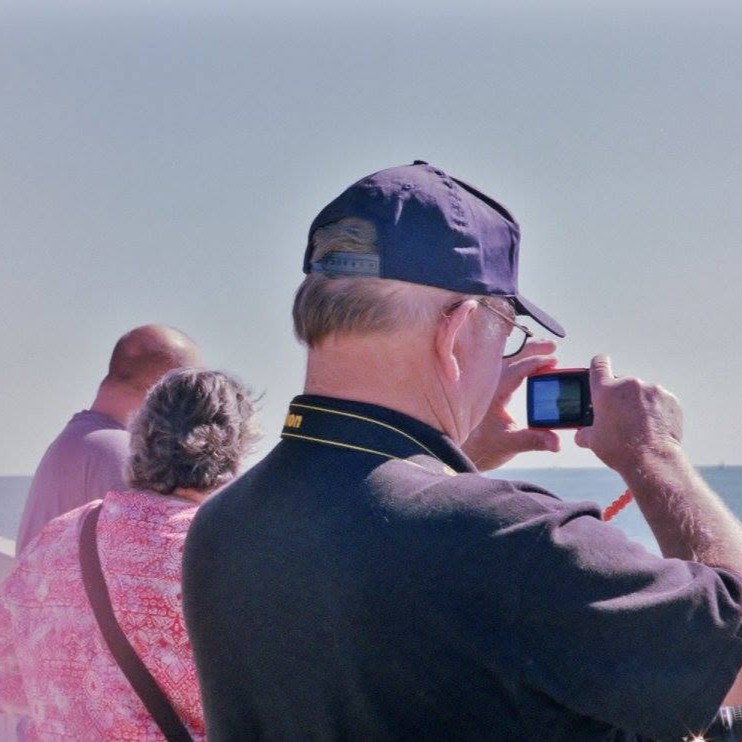
So anyway, on this day in 2016, we had nothing planned, and it was a Saturday, and it was beautiful, so we drove to the ocean, just 3 hours away, with the parents, and we ate at one of our favorite restaurants, and I watched my momma’s eyes take in the surf for the first time since she was 16, and Daddy had at least three different cameras with him, and we stood on Johnny Mercer Pier at Wrightsville Beach for what seemed like forever as the wind whipped our hair, and I quietly wept on the way home because it was such a perfect day.

Smyrna Dunes Park

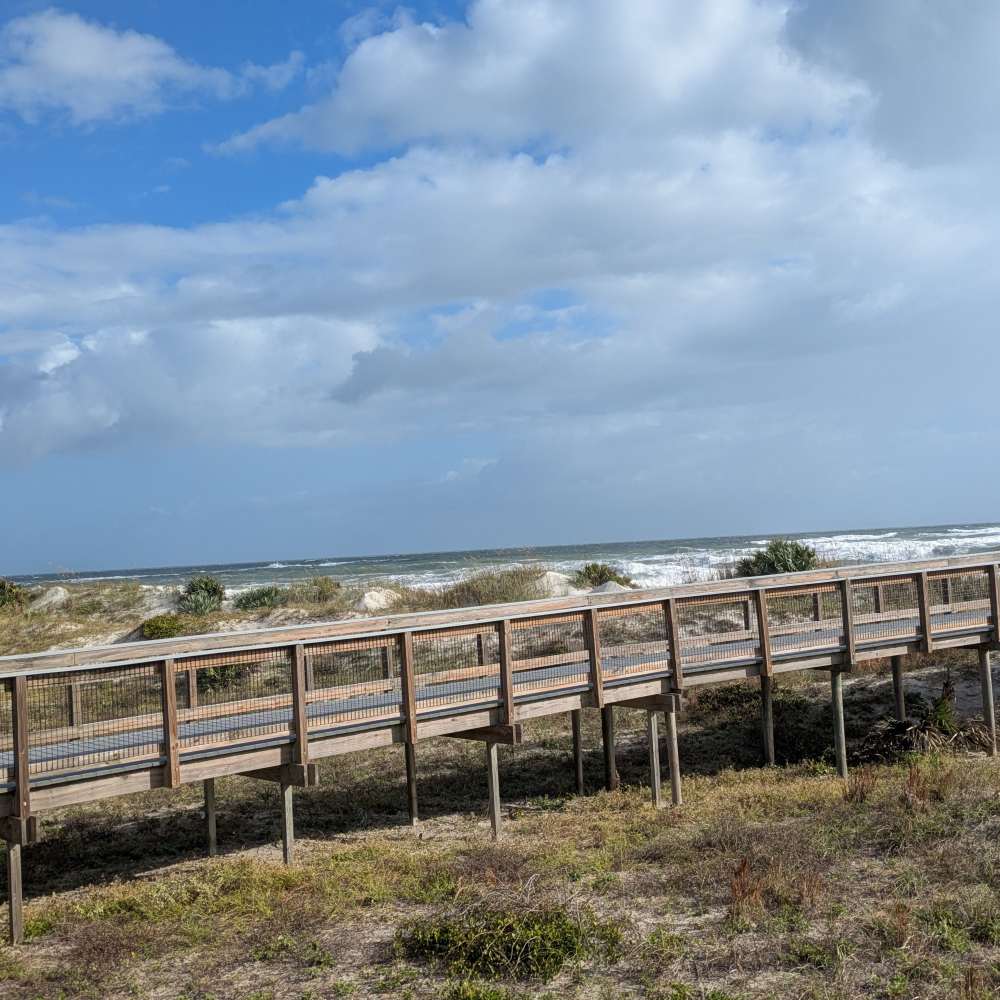
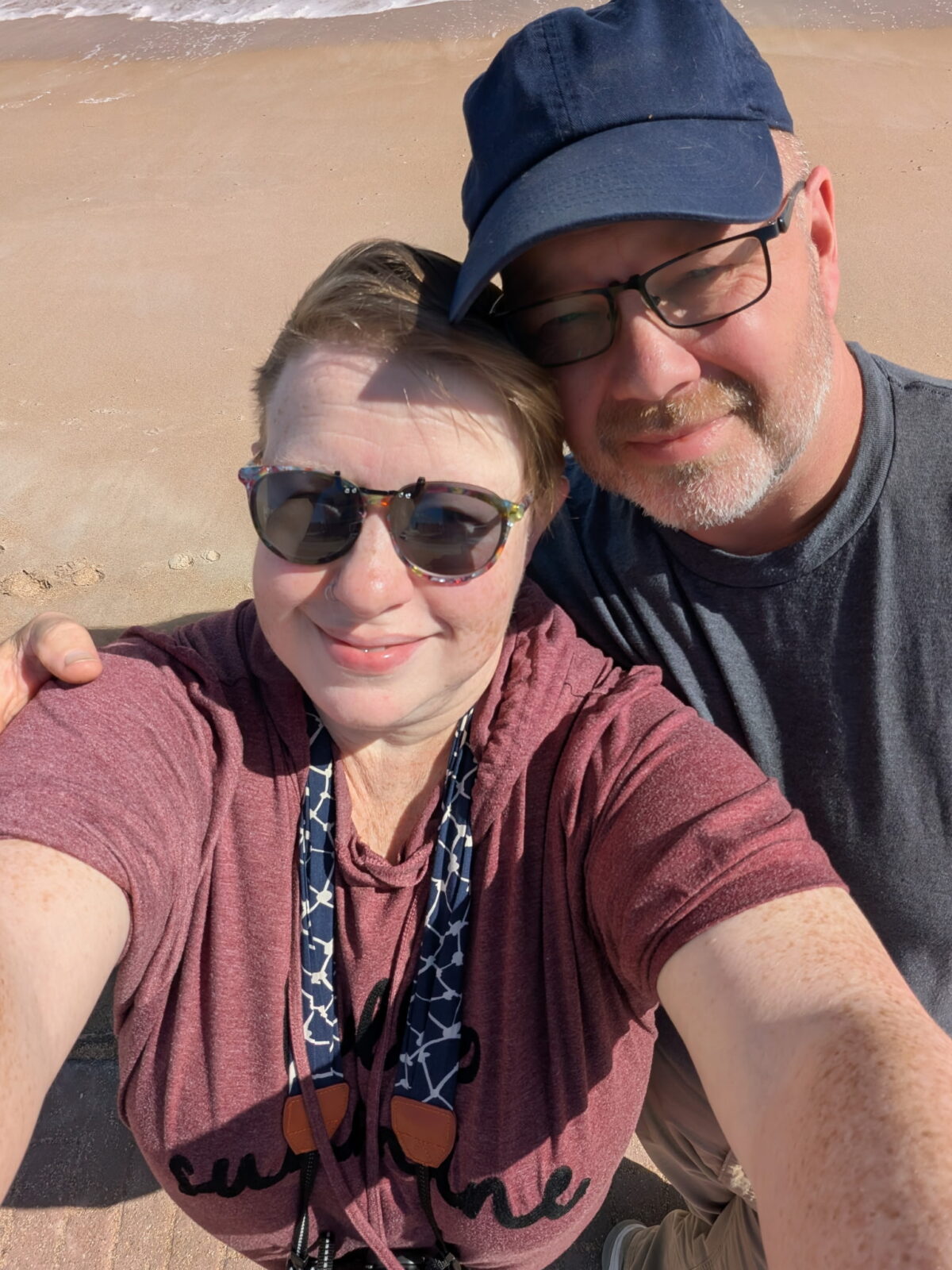
While visiting New Smyrna Beach this past weekend for our 17th wedding anniversary, we spent a morning at Smyrna Dunes Park.

It’s 184 acres of dunes and beach, filled with native plants and wildlife (look for the gopher tortoises that are everywhere!). There is a 2 mile (handicapped accessible) boardwalk that circles the park, observation towers, and docks that go out into the ocean. As my wife said, there is no place to look that isn’t beautiful.

Admission was $10 per car (regardless of number of passengers) so this could be a very family-friendly place to go. There is a large picnic pavilion with bathrooms at the trail head, plus eight pavilions with tables scattered along the trail at scenic spots.

We try hard to invest in memories and not things when on vacation, and we both agreed that this was the highlight of our trip, and had it been the only thing we did, it would have justified the drive.

6205 days

Give or take a leap year, we have been married 6,205 days, or 17 years, as of today. My life is pretty much divided into the sad days, and the days I have been married to her.

It hasn’t always been easy, but most things worth doing are not always easy. But it’s always been worth it.

It’s been a rough year, but thanks to some friends, we are able to spend this weekend outside Daytona Beach, Florida. We needed this. Like I said – it’s been a rough year. Next year doesn’t look much better. But we will do what we have done successfully for the last 6,205 days: Face it together.

It’s been six years

Six years ago today (October 22), my dad died after a brief illness from COVID. He tested positive on Saturday, and died the following Thursday.

Dad worked in Emergency Services, and so his death was ruled a Line Of Duty Death. I have written so much about him over the years, but it is the most Dad thing ever that he would die as a result of helping others.

Grief never ends. People ask sometimes how I’m doing, or how Mom is doing. Mostly, I say we are fine, but we miss him.

But the fuller truth is that when he died, it was as if a piece of glass shattered, with sharp edges and jagged pieces everywhere. And for weeks, these pieces just tumbled around, slicing and stabbing. It was really bad.

But as time went on, they rubbed up against each other, and eventually the edges wore smooth. They are still there, easily observable, but for the most part, they are softer, less abrasive, almost beautiful, like sea glass.

But every once in a while, you find a sharp edge. It catches you by surprise when it happens. Those hurt the most. It happens less often than it did.

But it still happens.

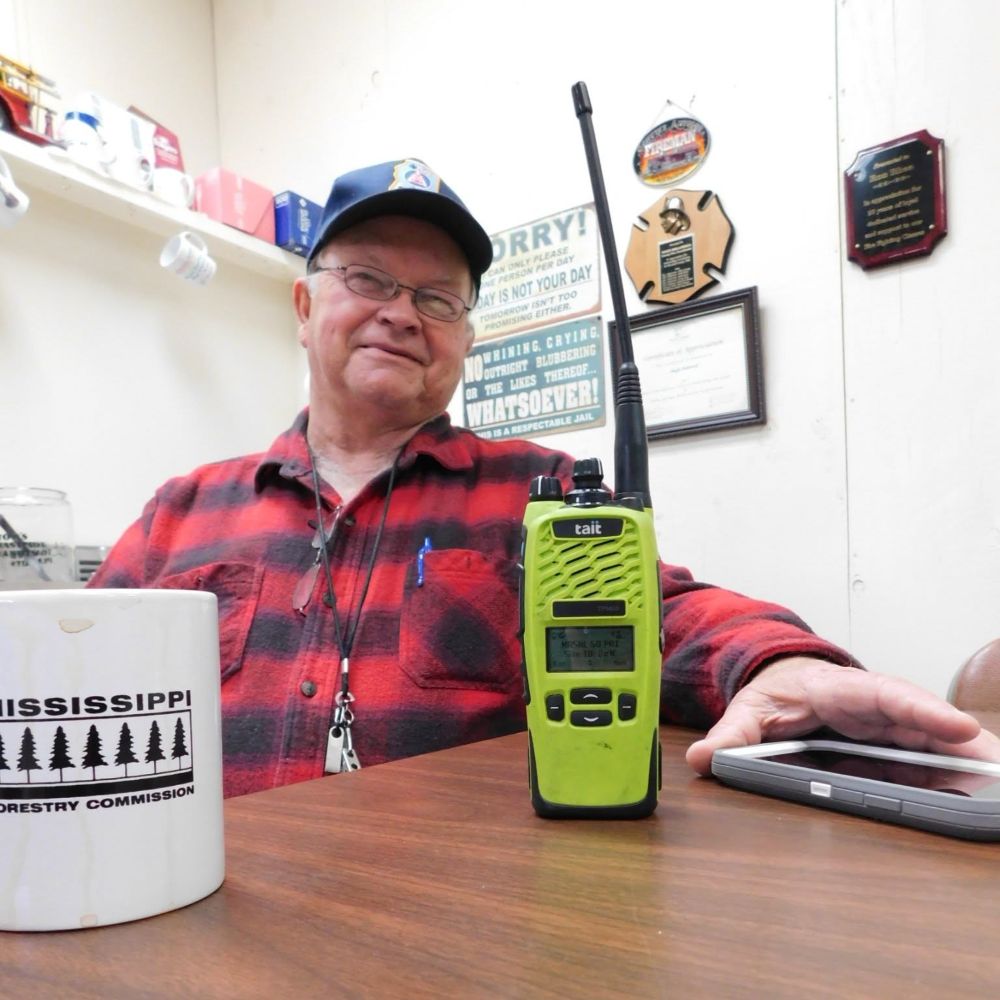
This is my favorite picture of my Dad. When the local paper ran a profile on him, this is the photo they took to run with the story.

It’s Dad as I remember him best. He’s at his desk, his funny signs in the background, his ubiquitous baseball cap on his head, his phone and coffee cup within reach, and his emergency radio close by so he is not out of touch in case of an emergency.

I miss him every day. 

Overbuilding

I’m working on building a screen house for some folks, and it occurred to me, not for the first time, that I am an overbuilder. Where most folks would use 3/8 sheathing, I use 1/2 inch. When 2×6 joists would be adequate, I spec 2×8. I hate it when structures have bounce in them.

Things used to be built to last for an indefinite amount of time. I think they still should be.

“When we build, let us think that we build forever. Let it not be for present delight nor present use alone. Let it be such work as our descendants will thank us for; and let us think, as we lay stone on stone, that a time is to come when those stones will be held sacred because our hands have touched them, and that men will say, as they look upon the labor and wrought substance of them, ‘See! This our father did for us.‘ ” – John Ruskin (1819-1900)

As one in love with the world

The writer (and personal hero of mine) Will Campbell told a story in his memoir, Brother to a Dragonfly, about a time as a child in Jim Crow Mississippi when he and a bunch of (white) friends are playing and a black child walks down the road.

Campbell and his friends begin chanting slurs at the boy, using the N-word. His grandfather, hardly a bastion of egalitarianism, calls the boys out for it, and told them that N-words don’t exist anymore. In other words, we don’t call people that now.

Campbell would recall this story in middle age as formative for him, one of half a dozen experiences in his life that shaped him forever around race. And yet, he says, it had virtually no impact on anyone else who was there. He wonders why it stood out so clearly to him as instructive, while others who were there don’t even remember it happened.

I feel a bit like that these days as I, a teenager in the 1980s who watched countless cautionary tales about machines that revolt and kill us, watch my peers embrace machines that even their creators think will revolt and kill us.

Sarah Conner would be ashamed of us.

In his essay “Feminism, the Body, and the Machine,” Wendell Berry delivers a response to his critics who came out when he mentioned, in his legendary piece Why I’m Not Going to Buy a Computer, that his wife types his manuscripts.

Both pieces are brilliant – Berry at his best. And while parts are dated, as any conversation about technology and culture must be, his critique of technology and the roles we assign it are biting.

My wish simply is to live my life as fully as I can. In both our work and our leisure, I think, we should be so employed. And in our time this means that we must save ourselves from the products that we are asked to buy in order, ultimately, to replace ourselves. – Wendell Berry

As I write this, the sun is rising, and since my desk faces east, the light through the east facing window in my office increases bit by bit. To my left, outside the north facing window, the call of the myriad birds that nest in the oak tree make a pleasant harmony, and my cat Puss scratches at the door to remind me that her food bowl has been empty for approximately 23 seconds and she is in danger of starvation. I live 1/2 mile from the interstate, and when the birdsong pauses, I can hear the hum of the semi-trucks, carrying their cargo to markets hither and yon.

As I embrace all of these senses and sounds, all I can do is feel joy that I am alive to experience them, and to know that there is no way I can write anything at this moment not influenced by all of it, even if I do not mention them. After High School, you no longer have to show your work.


Like Berry says in the first essay, I do not want to write faster. I do not want to write easier.

I want to write better. I want my writing to be more tender. I want it to reach deeper into the human heart. I want my writing to be more human, to invoke more compassion for the natural world, and to evoke a sense of empathy for other humans who need help to thrive.

AI cannot do that for me, because AI has never buried a parent, never feared for their life or the life of someone they love, never doubted, never hoped, never watched a sunrise over the water, never heard the call of the mockingbird, never walked in the woods, never felt relief when a check arrived, never eaten a piece of blackberry cobbler.

AI, in other words, knows jack shit about anything real. Your AI agent can quote a poem about love, it can even “write” one, if by write we mean rearrange words until it looks like what it believes a poem about love should look like, based on the millions of poems it has stolen from the creators of those poems. But no emotion will have gone into it, no judgement, no sense of self. No AI agent has ever cried as words appeared on a screen. No AI agent is enraptured by the hum of the data center in which it resides, moved to tears at the thought of the water table it is destroying with its existence.

Any reader familiar with my blogging will know that I have spent the last quarter century constantly struggling to figure out what I am actually doing. Am I a nature writer? A self-help writer? A spiritual writer?

The rise of AI, and the rush of my peers to slurp at its teat, has shown me that I am, first and foremost a human writer.

I write about and for humans, as one who is in love with humanity and the world in which we live.

Site Changes

It’s been a busy morning.

In keeping with the rebrand I mentioned last week, the blog has now moved to a new url – smallofferings.com. Unless you are reading this via RSS or on Mastodon, it should be seamless for you. If you are reading on RSS, the new feeds are here. It’s being syndicated to Mastodon at this account.

I did a light redesign, with a whimsical logotype and using red highlights. I’m not sure I like it – we’ll see. I still have some rough edges to knock off around the corners.

There is a new About page, that tries to explain what’s going on here.

If you are reading this via email, you are currently on the Essays plan, which means you will get the longer essay type posts when they publish – likely 1 or 2 emails a week. In other words, the way it has been.

But I am now going to begin sharing links and short notes to this site as well, and I don’t want you to get 15 emails a week. If you would rather a weekly email with everything I post in it, you can go to the footer of this email, click on manage your subscription, and then click Digest, instead of Essays.

I think that’s it – pardon the dust during these renovations, and we now resume regular programming.

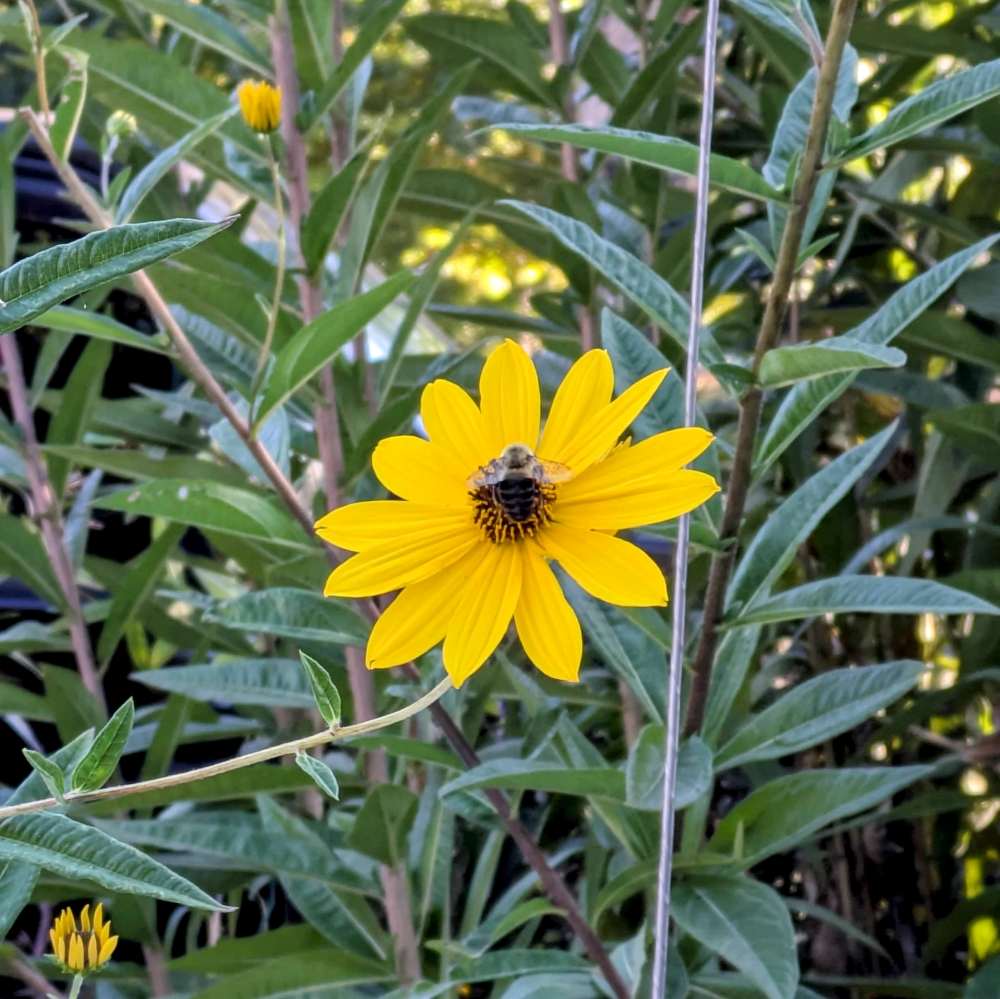
PS: Wanna see something cool? Here is a short video of the pollinators playing on the 12 foot tall Swamp Sunflowers in my front yard.

Here. I made this for you.

The way I was told the story, there was a pastor who had finally gotten to go on a long, well-deserved vacation, and while he was gone, a young preacher just graduated from the seminary filled in.

When the regular preacher got back, he asked his head deacon how it went.

“Oh, he was decent,” the head deacon said. “But I think every great preacher has one sermon they preach over and over, and he just hasn’t found his yet.”


Recently, I have been spending a lot of time thinking about what I’m trying to do with my writing. What my one sermon is, if you will.  And I think, if I have to nail it down, I’m just trying to make a case for a better world.

I have a newsletter that has gone out each week for almost 12 years, and it has a pretty tight purpose: It’s about how to survive in a harsh and brutal world.

I wrote a book about food, love, and memory.

I write sermons each week about how we build a better world than the one we have now.

I have a podcast where I tell stories that tend toward hope.

And then there is this blog. I have struggled with what goes here. It tends to be a mishmash of things. The leftovers, if you will. Things that don’t easily fit anywhere else. But mostly, they are small personal essays that trend toward the same pattern: Here is an alternative to this current world.  It doesn’t have to be like this.

The essays are descriptive, not prescriptive. “This is what I did”, not, “This is what you should do”.

All of this makes me a very bad internet writer. It also makes me a horrible spiritual teacher. Because the world is desperate for people who tell them what to do.

Not just what to do, though. What to think. How to think.

In the before times, the marketer Hugh Macleod told us that the market for something to believe in is infinite. And it’s true.

But I am not interested in telling you what to do, or believe, or what to think.

I don’t want to tell you how to schedule your day so that you can drink a cup of coffee on your back deck and watch the sun rise. Hell, I don’t even know if you have a back deck.


And then there is social media. Which is a damned mess.

What began for me as a way to stay in touch with people I care about and as a way to find new people has become a place that seeks to addict me to posts that either make me sad or outraged. Except when they want me to buy something.

Yesterday I opened my Facebook feed and the first 12 posts were either ads or people or groups I don’t follow, and have no real interest in. I have more than eleven thousand followers on there, and less than 10% of them ever see anything I write. Instead, they see what Facebook wants us to see.

Which is apparently things they want us to buy, or things that will make us mad.

And don’t get me started on the ways social media throttles free speech. If I have a link to an article I think you should read, if I post it to any of the social sites, they make sure virtually nobody sees it in their feeds, so you will stay on their site.

They have algorithms that decide what you can or cannot write if you want to be seen. I’m sure you have seen the social media shorthand folks use to get around it: Unalived, graped, yte folks. I totally get why they do it – if you don’t, nobody sees your stuff.

But I want to write and link to what I want. I hate being told what to do. I hate the idea of an algorithm training me to write acceptably to them as the cost of readership.

There is a trend in recent years to become more analog. People are buying flip phones. Using paper calendars. Sending postcards. Using paper planners. Much of this is in reaction to the ways tech, and especially algorithms and AI are being forced upon us.

So, I am going backward a bit myself – to about 2006. In 2006, I had this blog, and I would post links to videos I thought were funny on the new site called YouTube. I would write essays about things I had strong feelings about. I would link to other writers, and react to their writing. Lots of us did these things.

By 2010, much of that had moved to Social Media, and we got comfortable, and began to post less and less to our blogs. And then in 2013, Facebook began to restrict your audience unless you paid them. But by then, we had quit posting to sites we controlled, and had pushed our audience to social media.

So, I am taking back control. I’m recommitting to this blog, and will now be updating it regularly as if it is 2006 again. Sure, maybe only 200 people will see something I write, but at least it won’t try to make money by making me angry.

I’m rebranding it too, as part of my recognition of what I’m doing with my writing. What was formerly Hugh’s Blog (I hate naming things) is now Small Offerings, a site where I share things with you that either I write with you in mind, or that I found online and thought you would enjoy.

I have come to understand that each thing I create for others, whether a blog post or an essay or a book or an omelet or a cutting board, is a small offering to the world, a tangible representation of the world in which I wish to live. When I post something, it is me saying: Here. I made this for you.

What this means going forward

I will continue to write small (~ 1000 word) essays each week. The subjects will revolve around what is occupying my mind at the time. That might be my work, or my long-term effort to make my yard into a wildlife habitat, or the recipe I am trying to nail down, or the story of a trip we took.

But I will also share links to things I think are important, or that need wider distribution, or that I think are hilarious and that brought me much needed joy.

I will share small things – like a great photo, or an inspiring quote, or maybe a meme that really sums it all up.

Some of you reading this only read these things when I post them to social media. I currently syndicate this to Threads, BlueSky, Facebook, and Tumblr, and I post the full text on my personal Facebook page. For now, I have no plans to stop that.

Others read it via email. I have no plans to stop that either, but I recognize that most folks want less, not more, email in their inbox.

If you are a current email subscriber, you will continue to get an email with the full text of any essay blog post. This will be 1-2 posts a week.

The new posting schedule will begin next week, and after that, there will be an option to get one summary email per week with all essays, short posts, and links. I’ll let you know when that is live.

And some of you are still sitting on your RSS feedreaders. The RSS feed for just the essays is https://smallofferings.com/category/posts/feed/ and the RSS feed for all the posts is the same as it is now: https://smallofferings.com/ feed/

Rebranding is chaotic and involved. I am working off a long list of upgrades and features, so bear with me if things seem to be in disarray, that is because things are in disarray! For example, it really bothers me that I don’t have a logotype yet for the blog title on the website.

And of course, I should say that all of this – the more than 15 hours I have spent on this project over the last two weeks, the costs for the email service provider to deliver the posts, and all the costs of being a professional independent writer in the 21st century – are all covered by the membership team that supports my work and that allows me to focus on you and your privacy, instead of using intrusive ads and sponsorship deals. If my work matters to you, I hope you will consider becoming a member – not just for the perks, but to keep my voice online.  


If you liked this, you might want to subscribe, so you don’t miss future posts.