As one in love with the world

The writer (and personal hero of mine) Will Campbell told a story in his memoir, Brother to a Dragonfly, about a time as a child in Jim Crow Mississippi when he and a bunch of (white) friends are playing and a black child walks down the road.

Campbell and his friends begin chanting slurs at the boy, using the N-word. His grandfather, hardly a bastion of egalitarianism, calls the boys out for it, and told them that N-words don’t exist anymore. In other words, we don’t call people that now.

Campbell would recall this story in middle age as formative for him, one of half a dozen experiences in his life that shaped him forever around race. And yet, he says, it had virtually no impact on anyone else who was there. He wonders why it stood out so clearly to him as instructive, while others who were there don’t even remember it happened.

I feel a bit like that these days as I, a teenager in the 1980s who watched countless cautionary tales about machines that revolt and kill us, watch my peers embrace machines that even their creators think will revolt and kill us.

Sarah Conner would be ashamed of us.

In his essay “Feminism, the Body, and the Machine,” Wendell Berry delivers a response to his critics who came out when he mentioned, in his legendary piece Why I’m Not Going to Buy a Computer, that his wife types his manuscripts.

Both pieces are brilliant – Berry at his best. And while parts are dated, as any conversation about technology and culture must be, his critique of technology and the roles we assign it are biting.

My wish simply is to live my life as fully as I can. In both our work and our leisure, I think, we should be so employed. And in our time this means that we must save ourselves from the products that we are asked to buy in order, ultimately, to replace ourselves. – Wendell Berry

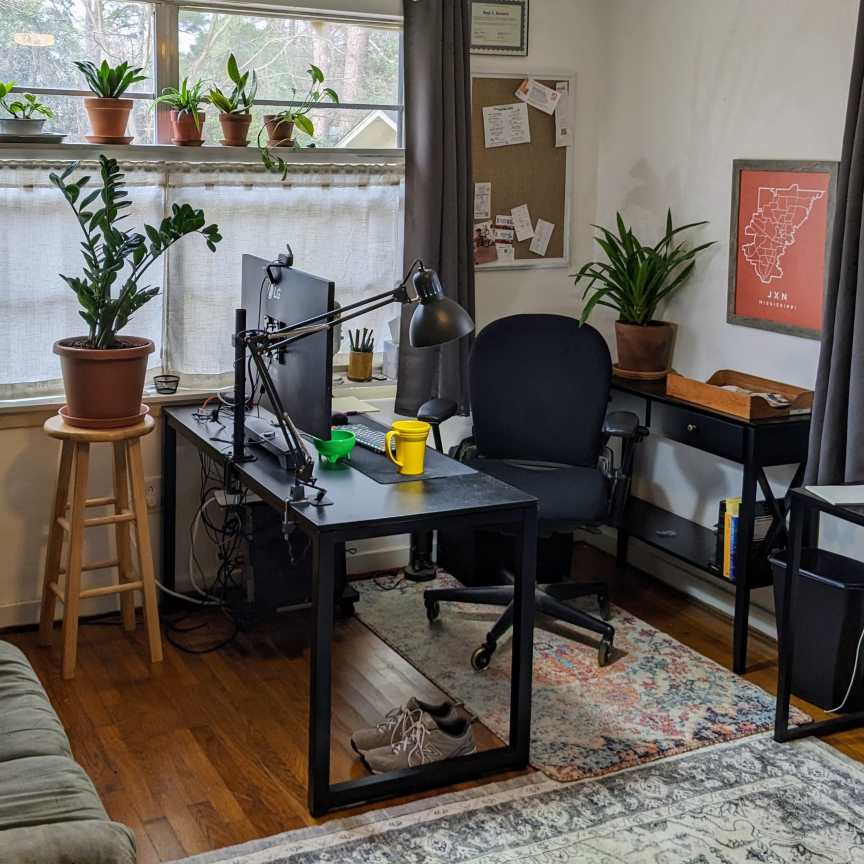
As I write this, the sun is rising, and since my desk faces east, the light through the east facing window in my office increases bit by bit. To my left, outside the north facing window, the call of the myriad birds that nest in the oak tree make a pleasant harmony, and my cat Puss scratches at the door to remind me that her food bowl has been empty for approximately 23 seconds and she is in danger of starvation. I live 1/2 mile from the interstate, and when the birdsong pauses, I can hear the hum of the semi-trucks, carrying their cargo to markets hither and yon.

As I embrace all of these senses and sounds, all I can do is feel joy that I am alive to experience them, and to know that there is no way I can write anything at this moment not influenced by all of it, even if I do not mention them. After High School, you no longer have to show your work.


Like Berry says in the first essay, I do not want to write faster. I do not want to write easier.

I want to write better. I want my writing to be more tender. I want it to reach deeper into the human heart. I want my writing to be more human, to invoke more compassion for the natural world, and to evoke a sense of empathy for other humans who need help to thrive.

AI cannot do that for me, because AI has never buried a parent, never feared for their life or the life of someone they love, never doubted, never hoped, never watched a sunrise over the water, never heard the call of the mockingbird, never walked in the woods, never felt relief when a check arrived, never eaten a piece of blackberry cobbler.

AI, in other words, knows jack shit about anything real. Your AI agent can quote a poem about love, it can even “write” one, if by write we mean rearrange words until it looks like what it believes a poem about love should look like, based on the millions of poems it has stolen from the creators of those poems. But no emotion will have gone into it, no judgement, no sense of self. No AI agent has ever cried as words appeared on a screen. No AI agent is enraptured by the hum of the data center in which it resides, moved to tears at the thought of the water table it is destroying with its existence.

Any reader familiar with my blogging will know that I have spent the last quarter century constantly struggling to figure out what I am actually doing. Am I a nature writer? A self-help writer? A spiritual writer?

The rise of AI, and the rush of my peers to slurp at its teat, has shown me that I am, first and foremost a human writer.

I write about and for humans, as one who is in love with humanity and the world in which we live.
Here. I made this for you.

The way I was told the story, there was a pastor who had finally gotten to go on a long, well-deserved vacation, and while he was gone, a young preacher just graduated from the seminary filled in.

When the regular preacher got back, he asked his head deacon how it went.

“Oh, he was decent,” the head deacon said. “But I think every great preacher has one sermon they preach over and over, and he just hasn’t found his yet.”


Recently, I have been spending a lot of time thinking about what I’m trying to do with my writing. What my one sermon is, if you will.  And I think, if I have to nail it down, I’m just trying to make a case for a better world.

I have a newsletter that has gone out each week for almost 12 years, and it has a pretty tight purpose: It’s about how to survive in a harsh and brutal world.

I wrote a book about food, love, and memory.

I write sermons each week about how we build a better world than the one we have now.

I have a podcast where I tell stories that tend toward hope.

And then there is this blog. I have struggled with what goes here. It tends to be a mishmash of things. The leftovers, if you will. Things that don’t easily fit anywhere else. But mostly, they are small personal essays that trend toward the same pattern: Here is an alternative to this current world.  It doesn’t have to be like this.

The essays are descriptive, not prescriptive. “This is what I did”, not, “This is what you should do”.

All of this makes me a very bad internet writer. It also makes me a horrible spiritual teacher. Because the world is desperate for people who tell them what to do.

Not just what to do, though. What to think. How to think.

In the before times, the marketer Hugh Macleod told us that the market for something to believe in is infinite. And it’s true.

But I am not interested in telling you what to do, or believe, or what to think.

I don’t want to tell you how to schedule your day so that you can drink a cup of coffee on your back deck and watch the sun rise. Hell, I don’t even know if you have a back deck.


And then there is social media. Which is a damned mess.

What began for me as a way to stay in touch with people I care about and as a way to find new people has become a place that seeks to addict me to posts that either make me sad or outraged. Except when they want me to buy something.

Yesterday I opened my Facebook feed and the first 12 posts were either ads or people or groups I don’t follow, and have no real interest in. I have more than eleven thousand followers on there, and less than 10% of them ever see anything I write. Instead, they see what Facebook wants us to see.

Which is apparently things they want us to buy, or things that will make us mad.

And don’t get me started on the ways social media throttles free speech. If I have a link to an article I think you should read, if I post it to any of the social sites, they make sure virtually nobody sees it in their feeds, so you will stay on their site.

They have algorithms that decide what you can or cannot write if you want to be seen. I’m sure you have seen the social media shorthand folks use to get around it: Unalived, graped, yte folks. I totally get why they do it – if you don’t, nobody sees your stuff.

But I want to write and link to what I want. I hate being told what to do. I hate the idea of an algorithm training me to write acceptably to them as the cost of readership.

There is a trend in recent years to become more analog. People are buying flip phones. Using paper calendars. Sending postcards. Using paper planners. Much of this is in reaction to the ways tech, and especially algorithms and AI are being forced upon us.

So, I am going backward a bit myself – to about 2006. In 2006, I had this blog, and I would post links to videos I thought were funny on the new site called YouTube. I would write essays about things I had strong feelings about. I would link to other writers, and react to their writing. Lots of us did these things.

By 2010, much of that had moved to Social Media, and we got comfortable, and began to post less and less to our blogs. And then in 2013, Facebook began to restrict your audience unless you paid them. But by then, we had quit posting to sites we controlled, and had pushed our audience to social media.

So, I am taking back control. I’m recommitting to this blog, and will now be updating it regularly as if it is 2006 again. Sure, maybe only 200 people will see something I write, but at least it won’t try to make money by making me angry.

I’m rebranding it too, as part of my recognition of what I’m doing with my writing. What was formerly Hugh’s Blog (I hate naming things) is now Small Offerings, a site where I share things with you that either I write with you in mind, or that I found online and thought you would enjoy.

I have come to understand that each thing I create for others, whether a blog post or an essay or a book or an omelet or a cutting board, is a small offering to the world, a tangible representation of the world in which I wish to live. When I post something, it is me saying: Here. I made this for you.

What this means going forward

I will continue to write small (~ 1000 word) essays each week. The subjects will revolve around what is occupying my mind at the time. That might be my work, or my long-term effort to make my yard into a wildlife habitat, or the recipe I am trying to nail down, or the story of a trip we took.

But I will also share links to things I think are important, or that need wider distribution, or that I think are hilarious and that brought me much needed joy.

I will share small things – like a great photo, or an inspiring quote, or maybe a meme that really sums it all up.

Some of you reading this only read these things when I post them to social media. I currently syndicate this to Threads, BlueSky, Facebook, and Tumblr, and I post the full text on my personal Facebook page. For now, I have no plans to stop that.

Others read it via email. I have no plans to stop that either, but I recognize that most folks want less, not more, email in their inbox.

If you are a current email subscriber, you will continue to get an email with the full text of any essay blog post. This will be 1-2 posts a week.

The new posting schedule will begin next week, and after that, there will be an option to get one summary email per week with all essays, short posts, and links. I’ll let you know when that is live.

And some of you are still sitting on your RSS feedreaders. The RSS feed for just the essays is https://smallofferings.com/category/posts/feed/ and the RSS feed for all the posts is the same as it is now: https://smallofferings.com/ feed/

Rebranding is chaotic and involved. I am working off a long list of upgrades and features, so bear with me if things seem to be in disarray, that is because things are in disarray! For example, it really bothers me that I don’t have a logotype yet for the blog title on the website.

And of course, I should say that all of this – the more than 15 hours I have spent on this project over the last two weeks, the costs for the email service provider to deliver the posts, and all the costs of being a professional independent writer in the 21st century – are all covered by the membership team that supports my work and that allows me to focus on you and your privacy, instead of using intrusive ads and sponsorship deals. If my work matters to you, I hope you will consider becoming a member – not just for the perks, but to keep my voice online.  


If you liked this, you might want to subscribe, so you don’t miss future posts.

On specialization

A human being should be able to change a diaper, plan an invasion, butcher a hog, conn a ship, design a building, write a sonnet, balance accounts, build a wall, set a bone, comfort the dying, take orders, give orders, cooperate, act alone, solve equations, analyze a new problem, pitch manure, program a computer, cook a tasty meal, fight efficiently, die gallantly. Specialization is for insects.”

― Robert A. Heinlein

I have, at various times in my life, read books and articles on how to be an internet writer. In days past, we would have called this person a blogger, but for most of the last 11 years I am best known for my newsletter, and the blog has gotten scraps. And now all the cool kids are on Substack. But at the end of the day, it’s still just writing on the internet.

Anyway, there is lots of advice out there about how to “build a platform”  and “build a brand” and “increase your readership.” And the single most common piece of advice you will get – hell, that I have gotten — was to stick to a niche.

I am sure this is good advice. And yet, I am constitutionally incapable of doing it.

For years, I write heavily about homelessness to promote a nonprofit I was running. I saw it as part of my job, but the whole time I was doing that, I also blogged and ran a newsletter. It would have been smarter to have only written about homelessness, or maybe even expanded to writing about poverty.

But I also want to write about gardening. And nature. And food. And memories. And hope and fidelity to purpose. Maybe some spirituality thrown in for good measure.

There is no section in the bookstore for nature – food – urban poverty – spirituality writers.

I put out a book at the beginning of the year, and it too is a hyphenated book a memoir -cookbook. If I was smart, I would only write about food, but that idea bores me to tears. See also spirituality or nature or gardening.

Part of it is my ADHD, I’m sure. I want to write about whatever I’m excited about at the moment, because writing is one of my ways of thinking. And when I am not excited about something, writing about it is exhausting.

But it cuts the other way too. I am a person who is generally interested in gardening. I own in excess of 150 books on gardening and horticulture. I have a half-acre lot filled with plants I put there on purpose. And sometimes, I am awash in the glories of my garden and yard, filled with butterflies and native bees and flowers and old roses and so many things.

But early this year, I fell into a depressive episode that held me in its clutches and would not let go. Not for love or money could I be convinced to care about my yard. Cutting the grass often enough to not piss off the neighbors was the upper limit of my care. If writing about my garden was my niche and I had readers who depended on me to write about gardening, I would be destitute at the moment.

But instead, I write about lots of things, and I do it well enough that some people stick around to see what I am going to write about next. It does make it damned awkward when you are asked what you do, and you say you are a writer and the next question is, inevitably: What do you write about?

Hell if I know. I’ve been writing online for almost 25 years now, so if I have not figured it out by now, the odds are against my figuring it out.

In any event, If you are reading this, I guess you are OK with my not having it figured out. So, thanks for that. Really. It means more than you know.

Power outage

Entergy took advantage of school being out for Thanksgiving break, and chose today to turn the power off for a few hours in order to change some equipment out.

I worked this morning at a table in Cups, a coffee shop in our neighborhood, and had this inspiring view all morning.

I used to work in coffee shops all the time, before the pandemic. But now, I’m used to working from home, with two large screens. I felt like a pioneer or something, working from my tiny laptop.

Flash writing

In 1964, US Supreme Court Justice Potter Stewart said, when attempting to define obscenity, that while he didn’t know how to define it, he knew it when he saw it.

I’ve been playing for the last week with Flash writing, specifically Flash Nonfiction, and as I’ve attempted top explain what it is to other people, I keep running into the same problem Justice Stewart had – Flash is easier to recognize than to define.

That it is short seems to be a thing everyone agrees with – but just how short is the question. Some say 1500 words, while others say 150. Arguments are made for everything in between.

It also needs to be a complete story – a beginning, a middle, and an end. In that way, it’s not an excerpt, or a snippet, or a vignette.

I was introduced to it in a memoir writing class taught by Janice Ray, and I fell in love with the format.

I like that it has constraints – similar to how Robert Frost is said to have said that free verse is like playing tennis without a net. One thing I loved about Twitter when it came out was the 140 character limitation. It made me a better writer, and communicator. This feels like that.

But one thing I really like is that I can do a first draft in like 15-20 minutes. Not a good draft, or even an adequate draft, but enough to see if the project will work.

I posted, without context, the first one I ever wrote last week. This was entirely written and edited in less than 30 total minutes. It’s not amazing, but it’s good, and encouraged me to keep trying.

Expect to see more Flash writing here in coming weeks. (Members got another piece of Flash Memoir this past Saturday.)

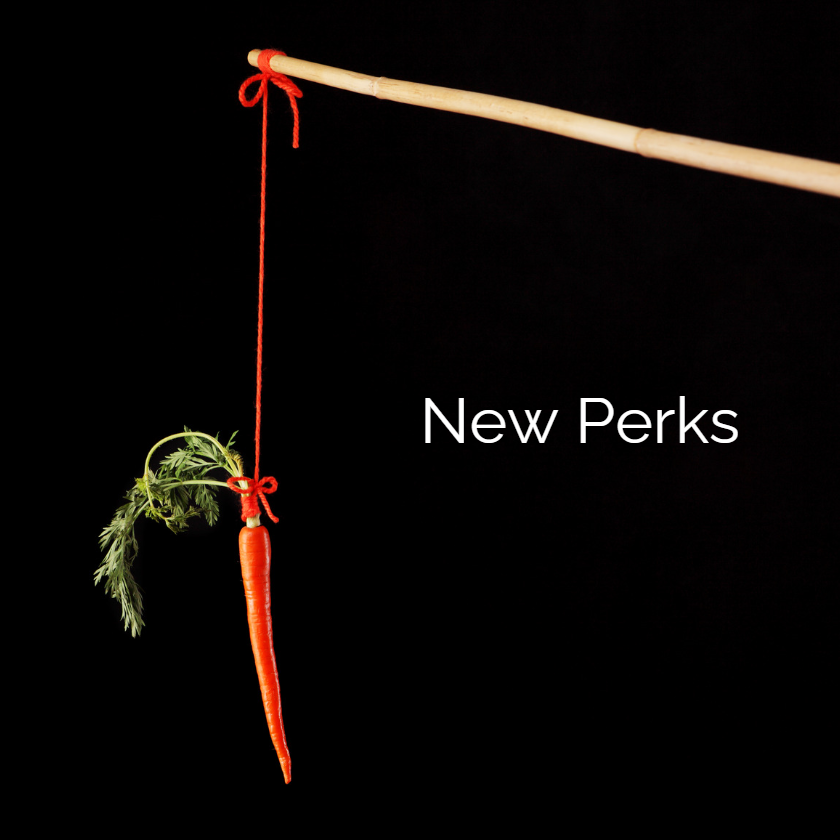
New Membership Perks

Trying to make any money as an independent writer is tough these days. Especially if you have scruples. And I do.

I don’t want people who read my stuff to be baraged by pop-up ads, videos that start playing automatically, privacy scraping cookies, or sponsored posts. I don’t want anything to come between me and my readers – not just graphically, but ethically. If I am holding a Yeti mug in a picture, I want you to know that it is because I chose that picture, not because I have a sponsorship deal with Yeti.

And I paid my bills for a few years in the early days of the web by writing marketing copy – I never want to have to do that again. I don’t want to write “teaser copy” to get people to click things they would not normally want to click. I don’t want to chase clicks, be sensational, or make you angry in order to increase my traffic or to curry favor with advertisers.

So, I have a Membership Program. It’s ~ 200 folks who give somewhere between $5 and $25 a month to support my various writing projects, such as this blog and my weekly newsletter.

What do they get out of it? Well, it’s sort of like NPR – there are perks, of course, but the major benefit is that they get to make sure there is more of my writing in the world.

But there are perks – and today, I’m adding a big one.

Beginning this weekend, Saturday the 17th of August, people who support my writing as part of my membership team will receive an original, unpublished essay in their inbox every Saturday morning. It will be around 800 to 1,000 words, give or take, and while the subject matter is flexible, there won’t be surprises – if you like my writing, you will enjoy this. I’m not going to suddenly take up writing romance or erotica or anything. Not that there’s anything wrong with romance or erotica. It’s just not what I want to write about. 

It does not matter what membership tier you are, either, Whether you are a $5 a month member or a $25 a month member, you get the same perks, including the weekly essay in your inbox. I am a big believer in the idea that we support the things that matter to us based on our capacity, so I’m intentionally not going to differentiate access because of the amount of money you send me. No matter your membership tier you get access to this.

You can learn more about becoming as member, what perks there are, and so on by going to this page.

Writing against the clock

It’s 5:30 AM, and the sky is still dark outside, but not as dark as it was 15 minutes ago when I woke up. As I write this, it’s Friday, but  it really doesn’t matter, as most days, the same thing happens.  The birds are singing the song of their people, letting their friends know they made it through the night. The kettle is almost ready, and the coffee grinder just finished. My kingdom for a quiet coffee grinder.

After making a cup of coffee in my Melitta (best $6 purchase, ever), in my Fiesta bistro mug (this one is Poppy colored, but the Meadow Green one is my favorite), I walk, cup in hand, to the room at the end of the hall that once was the bedroom of six different foster children, but is now my office. 

I have a hard time writing in silence – my ADHD won’t let me – but I also have a hard time writing when the music has strong lyrics – my ADHD won’t let me – so I end up mostly writing to instrumental jazz, classical or, rarely, techno. My audio setup is a bit of a hybrid of an old school stereo tuner (a cheap bookcase-sized Sharp) paired with my phone on bluetooth, via which today I am streaming this playlist from Amazon music. 

Now it’s 5:45, I’ve been up for 30 minutes. Daylight is breaking through, and the birds are much louder, and the music is playing and the chair is adjusted. I shut the door to the office (we have cats who will want to get on my keyboard otherwise), open Google Docs, open a new doc, and begin to write for the next hour. 

Hopefully. 

I don’t mean that I write hopefully, although I generally do. I mean that hopefully, something to write about will occur to me. Some days, it’s like a firehose, just pouring out of you, the words are. On those days, it’s hard to keep up with the flow, especially if you are a three finger and a thumb typist, like I am. 

On other days, nothing goes right. Nothing is interesting to you. You have nothing you want to say. You are bored with the world, and with the people in it, and have nothing to say to them, and wish you had not committed to yourself that you would hold this time sacred, this first hour of work each day. On those days, the words do not come. 

There are a variety of ways writers deal with this. Some people have word-count commitments. They apply their ass to the chair and stay there until they have 500 words, or 2,000 words, or whatever their daily goal is. I think this makes sense, assuming you have control over your time and are working on a specific project. 

I’m more of a time-based writer. This is the amount of time I have to write, and so I write, or try to, during this time, and how many words I get is just how many words I get that day. Some days, I might get 1200 words during that hour. Most days it’s 700 or thereabouts. Some days, when it’s particularly bad, it’s 50 words. 

There are times I wish I was a word – count writer, with the ability to just sit there, ass in the chair, staring at an empty page until the words come. But alas, the writing I do only supplies a portion of my income, and the mortgage must be paid, and the cat kibble purchased, and the living earned, so if I am to have words on the page today, they must show up before 7AM, or else they will just have to wait until tomorrow morning, unless time gets stolen from other obligations. It’s like having homework you are behind on, everyday, for the rest of your life. 

Because the time available to write is limited, and the words must show up then if they are to show up at all, you take pains to be careful with your words – or at least, it does for me. Sometimes, my limited writing time is spent staring at the screen, not because I do not have the words, but because I am forming the next sentence in my head, repeating it over and over, listening to the rhythm and the meter, because writing is for me just transcribing the words I already hear in my head. On the better days, it’s much faster, like transcribing the words you hear as they are being said.

But it also means the words seem more valuable, more scarce, more precious than they would otherwise. It makes revision particularly offensive – striking out a paragraph that you spent 30 of your precious sixty minutes on is viscerally painful. 

I turned 52 this year. Every time I mention this, folks older than 52 love to tell me how young I am. I realize 52 is not old, per se. Although, I was reading an Agatha Christie novel not long ago and a character described someone as an elderly man in his early sixties, and I put the book down, as I was not ready for that sort of violence. 

However, I turned 52 this year. Somewhere around my mid-forties, something shifted. Instead of the future seeming wide open, my dreams began to be accompanied with a Use-By date. Instead of thinking, “I would like to go hiking in the Alps one day,” it became, “I would like to go hiking in the Alps while I am still healthy enough to do it.” Instead of enjoying the first day of Summer, it became, “I might, if I am lucky, get to do this thirty more times.”

Time began to move quicker. I notice this especially in my writing, where words are already valuable because of the lack of writing time. If I get an hour a day to write, and I live to be 82, that’s only about 10,000 hours of writing left. 

The words are precious, and time is scarce.

And tomorrow, I will do it again.

My back against the wall

The biggest problem with a new office? Desk Placement.

Last week, in my Member’s Only newsletter, I wrote about moving into a new office. I described it thus:

It’s Monday morning, and I’m sitting in my new office. Or maybe it’s my new study. My new den? 

This is where I always get hung up – on the naming of things. Some writers even have studios, like they are painters or podcasters. 

In any event, I am sitting in the new room where, going forward and likely for the rest of my life, I shall do my writing. 

It’s a bedroom on the northeast corner in our house – some 11 and a half feet by 13 feet (3.5 x 4 meters) – with a double closet and three windows letting in lots of light, but none of it too aggressively. 

Long-time readers will remember that a bit more than a year ago I had moved into a storeroom off the carport. It was fine, if cramped, but was always suboptimal. So, when our housemate moved out, I took over his room and turned it into my office. Or study. Den? 

Anyway, it’s the room where I write.

It’s such a larger room than I had – almost twice the size, and laid out much better, squares being better suited to the human body than narrow rectangles. After I moved all the previous resident’s stuff out, I put a folding chair in the doorway of the room and just sat, waiting for the room  to tell me what it wanted to be. 

This is, honestly, my favorite part of any project. In the beginning, everything is possible. Built-in wall of shelves? No problem. A massive desk and credenza? Sure thing. Before such minor inconveniences such as budget and time factor in, I just let my mind roam with all the possibilities. 

But quickly, the main limitation became desk placement. 

The two general defaults I have seen are either putting the desk in the middle of the room, or putting it facing the wall. Neither made me excited. 

Putting it in the center of the room would be OK if I were Wendell Berry, dutifully typing out stories of Port William on an old manual Underwood, or Shelby Foote writing about the drama of the Civil War with a dip pen, but alas, I am me, writing on a modern computer, complete with a loud mechanical keyboard and a large computer monitor. And all of that needs to be plugged in, and whatever aesthetic value is gained from having your desk in the middle of the room is negated by having cords running from the wall. And yes, one can have outlets moved to the middle of the floor, but I’m still renovating my kitchen, so this office project needed to happen both quickly and cheaply. 

I have never really liked having a desk that faces a wall. I dislike having my back to the room, and especially to the door. I am told by webpages that purport to extol the virtues of Feng Shui that having your back to the door is unlucky, and while I know nothing of Feng Shui, I have no problem believing it. 

In addition, I find myself on a decent number of Zoom calls these days, and need a backdrop that doesn’t suck, to use a professional term. So facing the wall is out. 

I am not the first writer to struggle with desk placement. 

In his memoir On Writing, Stephen King advises:

The last thing I want to tell you in this part is about my desk. For years I dreamed of having the sort of massive oak slab that would dominate a room–no more child’s desk in a trailer laundry-closet, no more cramped kneehole in a rented house. In 1981 I got the one I wanted and placed it in the middle of a spacious, skylighted study… For six years I sat behind that desk either drunk or wrecked out of my mind, like a ship’s captain in charge of a voyage to nowhere.

A year or two after I sobered up, I got rid of that monstrosity and put in a living-room suite where it had been… I got another desk–it’s handmade, beautiful, and half the size of the T. Rex desk. I put it at the far west end of the office, in a corner under the eave…I’m sitting under it now, a fifty-three-year-old man with bad eyes, a gimp leg, and no hangover. I’m doing what I know how to do, and as well as I know how to do it. I came through all the stuff I told you about (and plenty more that I didn’t), and now I’m going to tell you as much as I can about the job…

It starts with this: put your desk in the corner, and every time you sit down there to write, remind yourself why it isn’t in the middle of the room. Life isn’t a support-system for art. It’s the other way around.

My desk isn’t handmade, and it isn’t beautiful – perhaps one day it will be, but remember, this needed to be fast and cheap – but I put on the Northern wall in front of a window, but perpendicular to it, so my back is to a wall, but some five feet from it, so I have room for a small credenza for storage. I’m also some six feet away from another wall, on which I have hung many photographs and long shelves, which contain a number of talismans and my working library. 

To my right is a large  north-facing window that looks out over the neighbor’s backyard. Cafe curtains ordered off Amazon block my view of his deck, but allow me to see the pine trees and the clouds, reminding me that I am part of the world, and not retreating from it. I hung a shelf just above the cafe curtains, on which half a dozen potted plants sit, serving as a sort of living portcullis between me and the world outside.

To my left as I sit is an open space large enough for me to stretch out on the floor and stare at the ceiling, as I do sometimes when my brain is just in too much tumult, and beyond that the door to the hallway. I leave that door open unless I am on a call, because I like seeing my wife walk by as she goes to check the mail, or that our two cats will sometimes walk in and sniff around to see what has changed in their absence. This too, is part of my world, and I am not retreating from it, either. 

So, here I sit, between shelter and the wild, back safely protected from the unexpected, looked upon by generations of people who loved me and believed me capable of great things, and facing the hundreds of books that shaped me into being.

And in this protected space, I write.  

You don’t simplify by adding things.

The urge to complicate things is almost endless.

There is always the hope that adding another layer will make it cleaner, easier, smoother. That if only you did this other thing, it would all magically work. We want there to be a shortcut. There has to be a shortcut.

There is no shortcut.

The urge to complicate things is almost endless. 

There is always the hope that adding another layer will make it cleaner, easier, smoother. That if only you did this other thing, it would all magically work. We want there to be a shortcut. There has to be a shortcut. 

Sadly, I have not found this to be true. I wish it were true, dear reader. But sadly, as my father used to remind me often, if wishes were horses, then beggars would ride. Or, as my less poetic but much more pragmatic neighbor would later say: Wish in one hand and shit in the other, and see which one fills up the fastest. 

I need a hack – a trick – a secret technique or program or app that, if added to my routine, will simplify my life. 

But the hard reality is that adding things almost never simplifies them. Adding only increases the complexity. 

These days I’m trying to reduce the complexities in my life. One website instead of three. Two email accounts instead of a separate email account for each project. Two checking accounts – one business, one personal – instead of various subaccounts and complicated transfer regimens. A few social media outlets – One primary, another secondary, and a third to experiment with – is plenty, and maybe even two too many.

As I grow older, I find myself craving simplicity. Maybe it’s that I am more aware of the finite number of hours remaining, the limited number of mornings left for me to sit in front of the computer and actually do the work. The siren call of a YouTuber – let’s call them “Bookpreneur” – and their tempting video “7 Things You Should Buy to Make Writing Easier” – complete with affiliate links in the description! – goes unviewed, and I know that all the killer apps in the world won’t help you write if you don’t put your ass in the chair, and your fingers on the keyboard.

A lot of complication is ultimately just an avoidance activity. It’s more fun to shop for gym shoes than it is to go to the gym, more fun to search for and set up productivity apps than it is to be productive, and more fun to shop for notebooks than it is to write in them.

The blinking cursor

Sometimes, you do everything right, and it still doesn’t work.

You get 7.5 hours of sleep.

You eat a high protein breakfast.

You drink your large cup of coffee.

And you sit at the desk, turn on the classical music channel on the stereo, fire up Microsoft Word, and you begin to write.

Well, that’s not quite true. You have prepared to begin to write. But there is the blank page. The blinking cursor.

But the problem is that not only is the page blank, so is your mind.

Well, maybe that’s not quite true. Your mind is never quite blank. As your therapist is fond of saying, it’s not that you have a deficiency of attention as much as you have a surplus of it. Your brain is overflowing with ideas, with stories, with plans, with things you want to try and to test out and it is all just swirling in there. How do you pick just one of them to focus on for the next two hours to write an 800-word essay?

Some days it’s easy. You have an idea or a story that has been in your mind for days or, sometimes, weeks. You can’t shake it. You just turn it over and over, looking at it this way and that way, so that when you do sit down in front of the blinking cursor, it really writes itself. You are just the medium, and you understand, briefly, why the authors of scripture thought they were inspired by God. It’s as if you are just the hands that type it, while the ideas come from elsewhere. Those are the best days.

Other days you agreed to write a particular thing – an article for a newspaper, or a review of a friend’s book, or something. And because this is for someone else, there is a deadline. You try to put it off, hoping clarity will come, hoping that it will rise through the swirl of ideas in your brain to the surface. Sometimes it does, but not on these days. No, on these days it is the day before it is due and you simply must write something, and so you apply ass to chair and you begin typing, and sometimes what you write is amazing, and sometimes it’s serviceable and sometimes legible is all you can hope for. But regardless, you did the thing, and after all, fed is best.

And then there are the days like this one.

The cursor blinks. Your ass is in the chair.

And nothing swirls up. Nothing stands out.

But the cursor blinks.